

Breakthrough Research: “When Resources Meet Relationships”
New Research from Harvard and Cornell Confirms that Communities In Schools’ Model Drives Long-Term Success
Landmark research conducted by Opportunity Insights in partnership with the EdRedesign Lab at the Harvard Graduate School of Education finds that the Communities In Schools® (CIS®) model of integrated student supports significantly improves academic performance, educational attainment, and adult earnings for students at-risk of dropping out.
The study, When Resources Meet Relationships: The Returns to Personalized Supports for Low-Income Students, evaluates CIS’ evidence-based model of individualized student support. It finds that placing a CIS site coordinator on campus leads to meaningful improvements in academic and life outcomes.
The research was featured in The Atlantic, "The Program That's Turning Schools Around," where Annie Lowrey profiles the CIS model in action and makes the case for scaling what works.
The Communities In Schools model is built on a relationship-driven approach, refined over nearly 50 years. CIS’ full-time, campus-based Student Support Specialists develop individualized plans and provide academic, social, housing, and health services tailored to each student’s needs.
Key Findings
The research demonstrates that CIS’ relationship-driven approach drives outcomes that shape high-risk* students’ future lives, including:
Improved Test Scores
Middle schools with CIS see improvements in standardized test scores for high-risk students.
Higher Graduation Rates & College Enrollment
Three years of CIS exposure raises high school graduation rates for students by 5.2%.
Advances Economic Mobility
Three years of CIS exposure increases adult earnings by 4.3% annually, or $75,000 over a lifetime.
Strong Return on Investment
Three years of CIS support—approximately $3,000 per student—generates an additional $7,100 in lifetime federal tax revenue, yielding a $2.36 return for every dollar invested.
*The research identifies “high-risk” students as those most likely to receive CIS services based on early warning signs, such as low test scores, poor attendance, and disciplinary incidents.
“Communities In Schools of Texas is an important asset for our public schools. The services they provide—and more importantly, the relationships they build—increase graduation rates, boost lifetime earnings, and change lives for the better. The increase in economic mobility creates a stronger Texas and a better future for all of us.”
CIS Impact on Economic Mobility
$75,000
$7,100
Lifetime Earnings Increase
Three years of CIS exposure—an investment of about $3,000 per student—is estimated to increase lifetime earnings by more than $75,000 ($36,000 in present day value).
Additional Tax Revenue
Three years of CIS support—approximately $3,000 per student—generated $7,100 in additional lifetime federal tax revenue, yielding a $2.36 return for every dollar invested.
CIS of Houston Impact
Student Success that Lasts a Lifetime
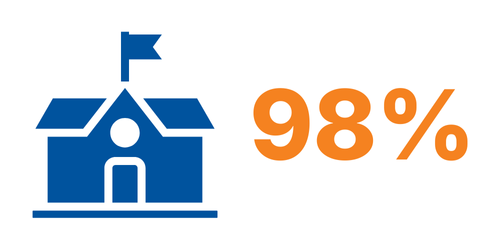
of CIS students stayed in school
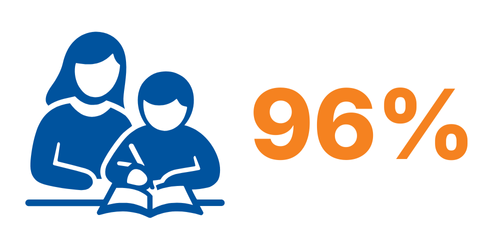
of CIS students improved in academics, attendance and/or behavior
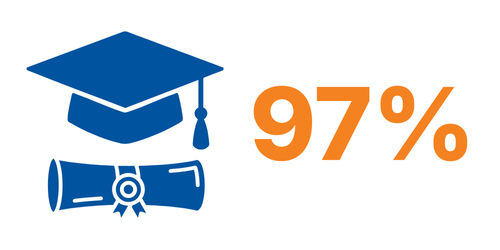
of eligible CIS seniors graduated
*Results based on CIS case-managed students (2024-2025 school year outcomes)
Publications
Harvard-Cornell Economic Mobility Study
Authored by Benjamin Goldman (Cornell University, The EdRedesign Lab & Opportunity Insights) and Jamie Gracie (Harvard University & The EdRedesign Lab), the working paper, “When Resources Meet Relationships: The Returns to Personalized Supports for Low-Income Students”, evaluates the impact of Communities In Schools on students, enabling them to succeed in school and beyond.
The research examines both short-run academic outcomes for high-risk students—such as test scores, attendance, and discipline—and long-run outcomes, including high school graduation, college enrollment, and adult earnings, to assess the broader and lasting impacts of CIS.
The analysis uses data, including Census and federal tax records, as well as K–12 education records from Texas, where nearly half of CIS schools are located.
To learn more about the research, explore the EdRedesign policy brief, full paper, and non-technical summary.

CIS of Houston Annual Report (24-25)
CIS was founded on the belief that all students have the potential to succeed, but we also understand that not all students have the same access to the resources and opportunities they need to reach that potential. By placing full-time, trained and caring adults directly on school campuses, CIS connects students and families to academic, mental health, and basic-needs resources that help them overcome barriers to learning.
Our data clearly shows that partnering with CIS helps students succeed. Through strong partnerships with schools and community organizations, CIS helps students stay engaged, succeed in the classroom, and build brighter futures.
Explore the CIS of Houston Annual Report to see how our partnerships are helping thousands of students across Greater Houston.

Why CIS?
This overview highlights how Communities In Schools of Houston supports students directly on campus through relationship-based services that address both academic and non-academic barriers to success. With full-time staff embedded in schools, CIS connects students and families to the resources they need. From academic assistance and mental health support to basic needs and family engagement, CIS helps students stay in school and succeed in life.